

Who is Fenrir?
How did our dog get his name?
When we introduce Fenrir to someone new, the conversation usually goes something like this:
"He's lovely! What's his name?"
"Fenrir."
"Fen... what?"
Over the months, he's been called every variation imaginable: Fenry, Fenrin, Fenrid, Henry. So I thought I'd write a little about where his unusual name came from.
If you know me personally, you'll know I'm a huge nerd. I love video games, fantasy worlds, and mythology. I can quite happily disappear into ancient lore for hours.
One of my favourite areas of mythology is Norse mythology - the stories of Odin, Thor, Loki and Ragnarök. If you've played God of War: Ragnarök, you'll probably recognise the name Fenrir. In the game, he is later shown as a giant wolf, who is powerful but very palyful!
I remember turning to my partner and saying:
"I want a Fenrir of my own."
A few weeks later, we brought home our very own wolf pup. Not a real wolf, of course - but a black German Shepherd who certainly looked the part!
So Who Was the Original Fenrir?
In Norse mythology, Fenrir (sometimes called Fenris) was a gigantic wolf and one of the children of Loki, the trickster god.
The gods quickly realised that Fenrir was growing larger and stronger than any ordinary wolf. As he grew, they became fearful of the destruction he might one day cause. According to the legends, Fenrir was destined to play a major role during Ragnarök - the catastrophic battle that would bring about the end of the world.
To prevent this fate, the gods attempted to bind him with chains. Fenrir easily broke every chain they placed on him, until they commissioned a magical ribbon called Gleipnir, forged from impossible ingredients such as the sound of a cat's footsteps and the beard of a woman.
Suspicious of the gods' intentions, Fenrir agreed to be bound only if one of the gods placed their hand in his mouth as a sign of trust. The brave god Tyr accepted the challenge. When Fenrir realised he had been tricked and could not break free, he bit off Tyr's hand.
Despite being one of the most feared creatures in Norse mythology, Fenrir isn't always portrayed as a villain. In many ways, he's a tragic character - a creature feared for what he might become rather than what he had done.
Our Fenrir
Thankfully, our Fenrir's story is a little less dramatic.
While he certainly has the ears, the looks, and occasionally the attitude of his namesake, his greatest acts of destruction have mostly involved his bed, stuffed toys and our arms.
He's brought more joy, laughter, and adventure into our lives than I could have imagined. In fact, he's the entire reason Fenrir Pack Walks exists.
Without him, I'd probably still be sitting behind a desk wondering why something felt missing.
Instead, I'm spending my days outdoors, surrounded by dogs, exploring new places and helping other owners give their dogs the adventures they deserve.
So the next time you hear someone say:
"Fenrir? That's an unusual name!"
You'll know exactly where it came from.
And if you still can't pronounce it, don't worry - you're definitely not the first.
Pronunciation guide:Fen-rear 🐺
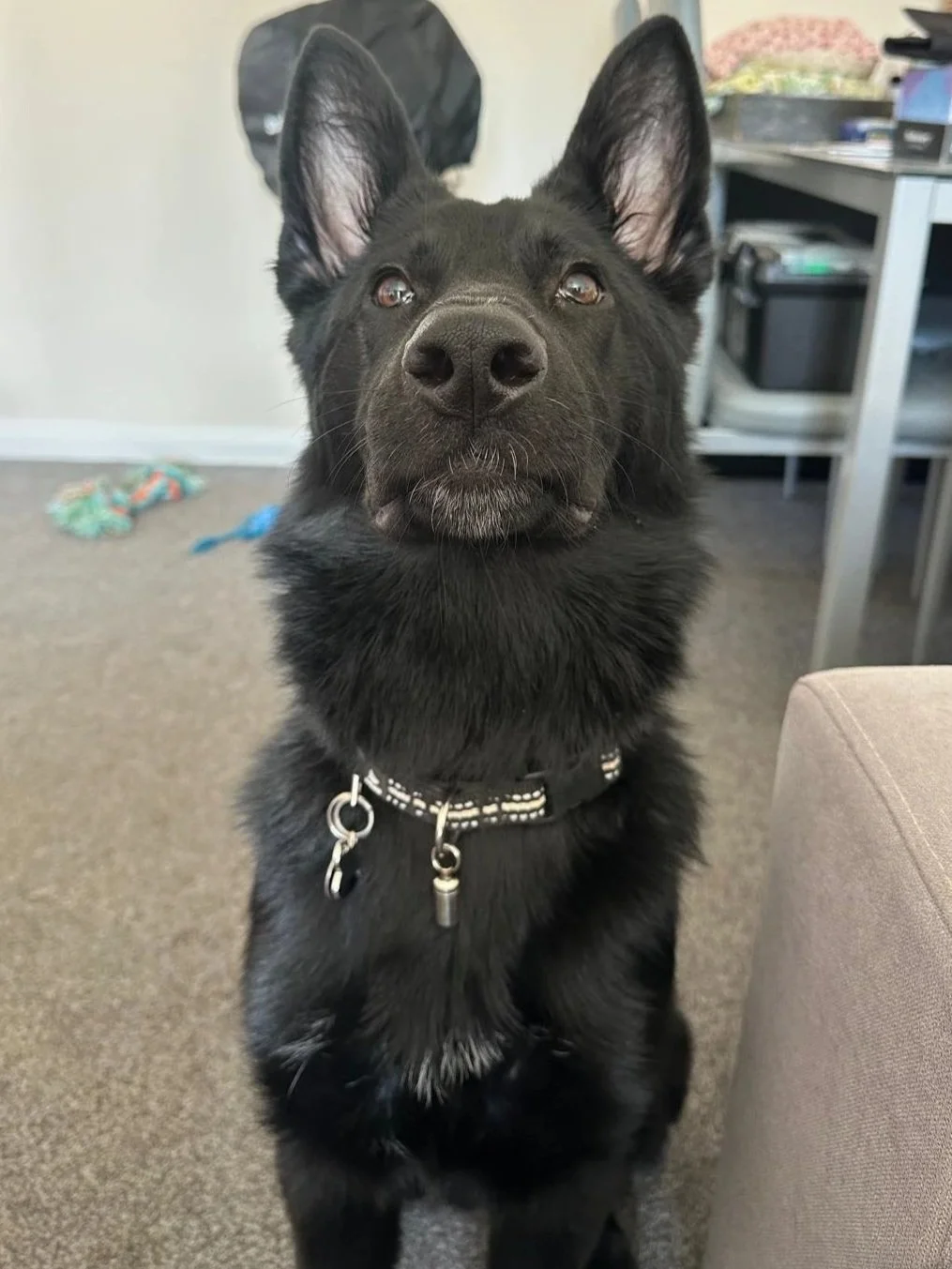
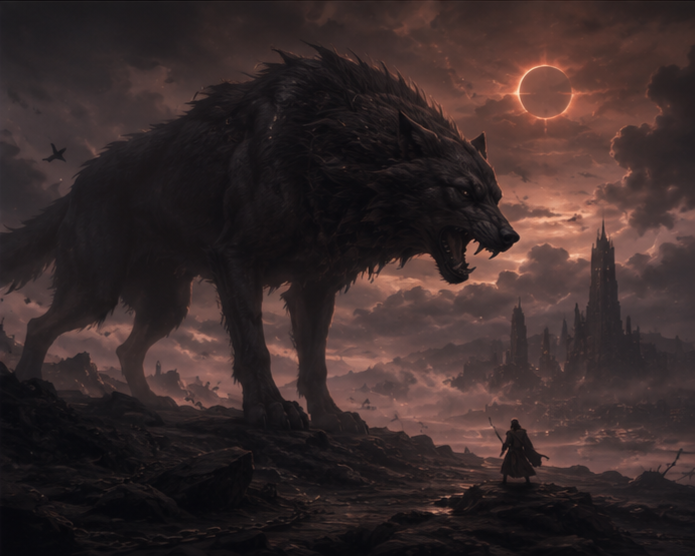
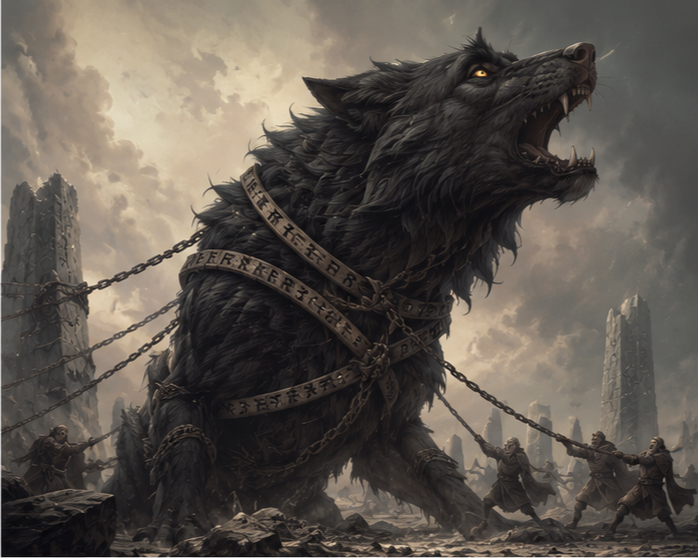
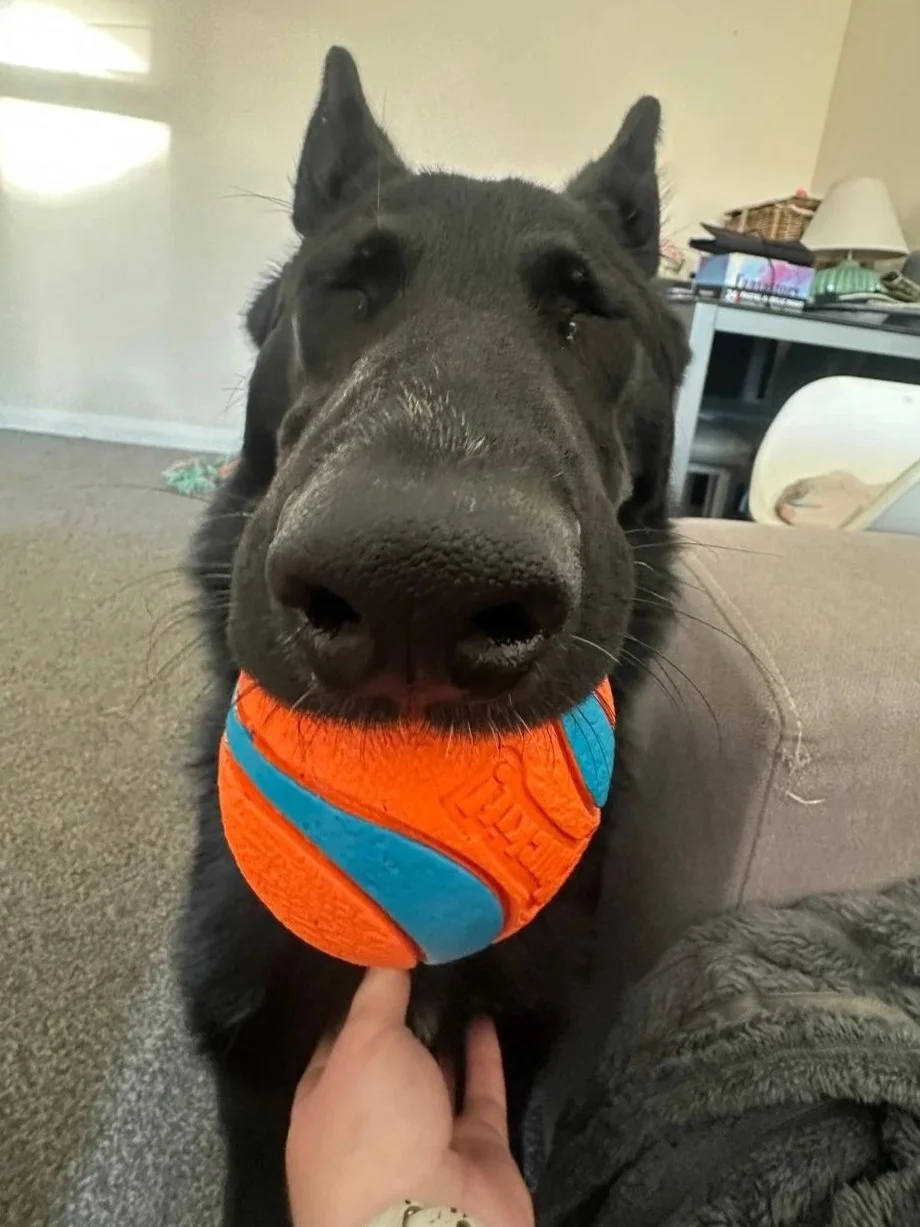
Notice the similarities?